The five best recruiting books for 2026 are The Skills-Powered Organization (Ravin Jesuthasan and Tanuj Kapilashrami, 2024), Full Stack Recruiter (Jan Tegze, 2020), Who: The A Method for Hiring (Geoff Smart and Randy Street, 2008), Talent (Tyler Cowen and Daniel Gross, 2022) and The Algorithm (Hilke Schellmann, 2024). Read together, they cover the whole hiring cycle: defining the work, finding the people, assessing them, spotting what a CV hides, and keeping AI screening honest.
We chose them for how much each one changes the way an HR team hires. They are ordered the way a search actually runs, and each section ends with how the advice translates when you are hiring professional talent in Indonesia, the market our recruitment teams work in every day.
The five books at a glance
The table below shows who wrote each book, when it came out, and the one idea an HR team should take from it.
Book | Authors | Published | Best for | The one idea to take away |
|---|---|---|---|---|
The Skills-Powered Organization | Ravin Jesuthasan, Tanuj Kapilashrami | MIT Press, 2024 | Writing the brief | Hire for skills and outcomes, not titles |
Full Stack Recruiter: The Ultimate Edition | Jan Tegze | 2020 | Sourcing | Find candidates through research and direct outreach |
Who: The A Method for Hiring | Geoff Smart, Randy Street | Ballantine, 2008 | Assessment | Judge candidates against a scorecard of outcomes |
Talent | Tyler Cowen, Daniel Gross | St. Martin's Press, 2022 | Interviewing | Get candidates out of interview mode |
The Algorithm | Hilke Schellmann | Hachette, 2024 | AI in hiring | Make every AI tool prove it works |
1. The Skills-Powered Organization: define the work before the job title
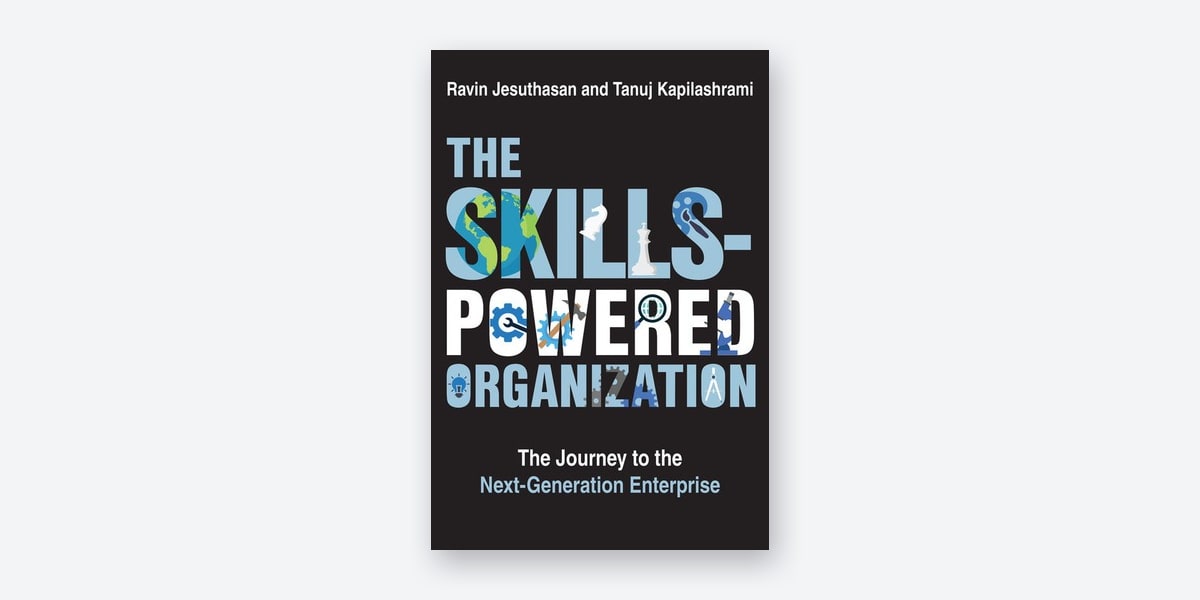
The Skills-Powered Organization argues that the job, a fixed bundle of tasks with a title on top, has become too slow a unit for organising work, and that skills should be the currency instead. Ravin Jesuthasan and Tanuj Kapilashrami, formerly Standard Chartered's Group Head of HR, published it with MIT Press in October 2024. It is the most practical recent book on skills-based hiring for anyone who writes job briefs.
Key takeaways for HR teams:
Break a role into the tasks it must deliver and the skills each task needs before writing the job description. The title comes last.
Screen for demonstrated skills. A degree or a previous title is a proxy, and the book pushes hiring teams to test for the skill itself.
Treat the skills you hire as capability the organisation can redeploy, not a seat filled once. The chapters on talent marketplaces and internal mobility matter most to in-house HR leaders.
Applying it in Indonesia
Job titles do not travel well across borders. A "manager" can be a team lead with five reports or a senior individual contributor, depending on the company. The useful part of a brief for a role in Jakarta is the list of outcomes and the tools the person will use. Write "has managed paid acquisition budgets above USD 20,000 a month" instead of "Marketing Manager, five years", and candidates from multinationals, regional agencies and fast-growing local firms become comparable on the same terms.
2. Full Stack Recruiter: how to research and approach candidates
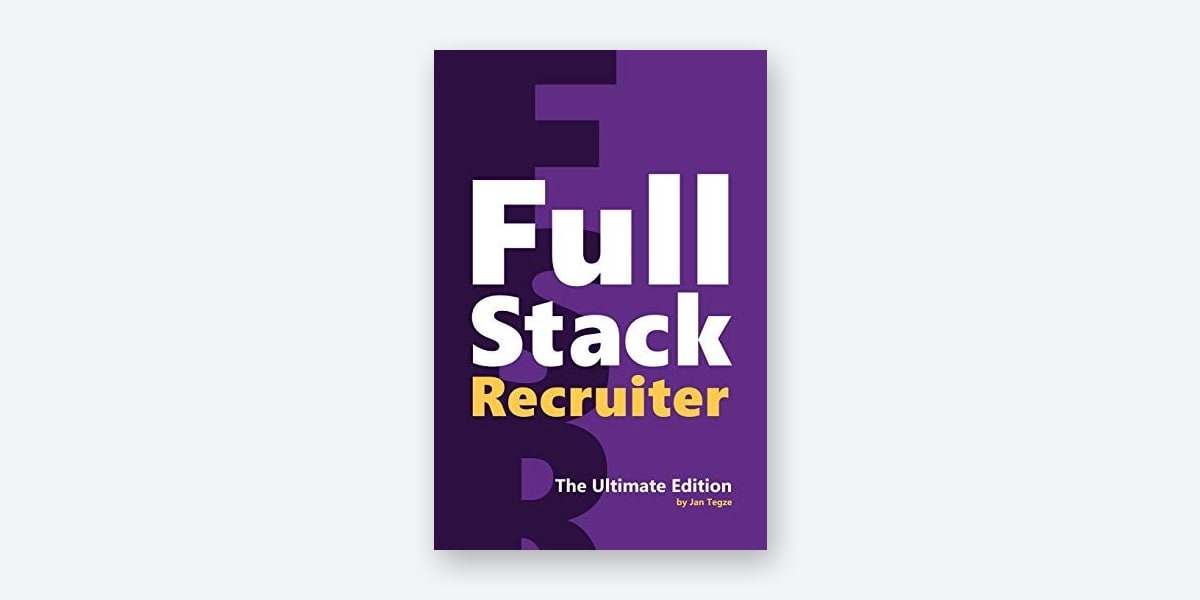
Full Stack Recruiter: The Ultimate Edition by Jan Tegze is one of the most complete hands-on manuals for talent sourcing in print. Its 17 chapters fall into two parts. Seven cover sourcing: Boolean and X-ray search, search engines and sourcing tools, GitHub and technical communities, OSINT and finding contact details. Ten cover the rest of the job, including LinkedIn, employer branding, candidate experience, cold calling and analytics.
Key takeaways for HR teams:
Boolean logic is the foundation. Once you can combine titles, skills and exclusions precisely, almost any platform becomes searchable, including ones with a poor search box.
Search where people do their work, not where they look for jobs. Engineers leave evidence in code repositories and communities. Marketers leave it in campaigns and case studies.
Outreach is where sourcing converts. A message that shows you have read someone's work earns a reply, and a template rarely does.
Measure the funnel. Response rates by channel and by message tell you where the next hour of sourcing should go.
One caveat: the book predates generative AI, and platform-specific tricks age quickly as sites change what they make searchable. The method holds even when particular search strings stop working.
Applying it in Indonesia
Most strong professionals in Indonesia are employed and not browsing job boards, so a plan that only posts an advert reaches a fraction of the market. Active job seekers are on JobStreet, Glints and Kalibrr. Employed, MNC-trained candidates are more often reached directly through LinkedIn and referrals. Search in English and Bahasa Indonesia, because many profiles mix the two in titles and skills ("staf akuntansi" alongside "accounts staff", for example). And write outreach that names the candidate's actual work. Experienced professionals receive plenty of generic messages, and they reply to the ones that refer to their own work.
3. Who: The A Method for Hiring: score outcomes, then interview for evidence
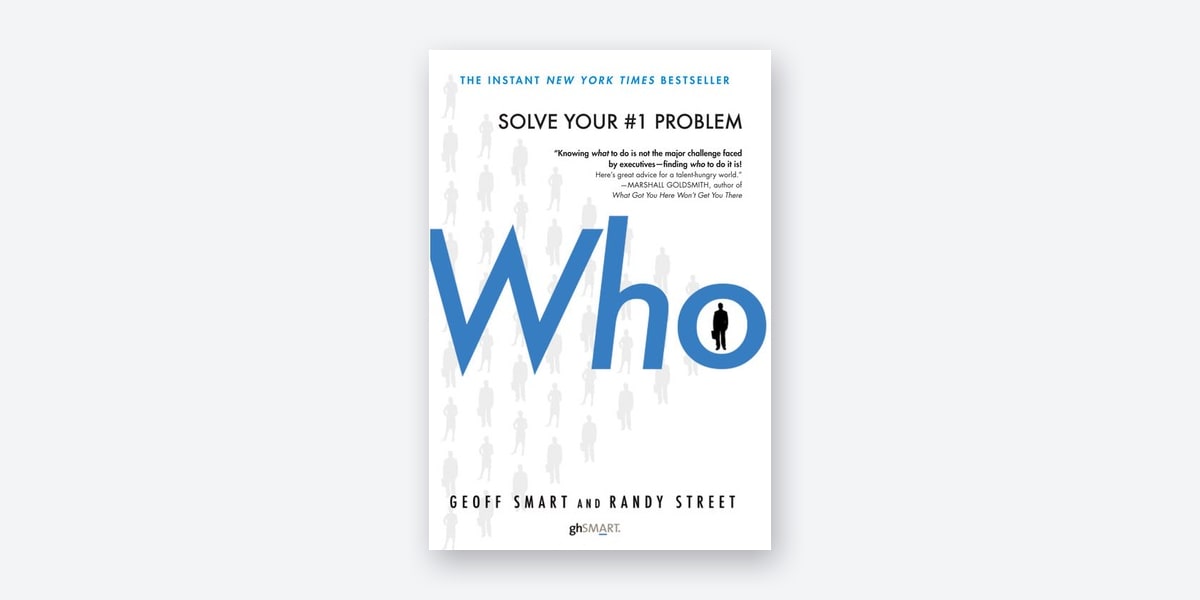
Who gives HR teams and hiring managers a four-step hiring method (scorecard, source, select, sell) that still holds up almost two decades after publication. Geoff Smart and Randy Street built it from more than 1,300 hours of interviews with over 300 CEOs and 20 billionaires, and they estimate that a hiring mistake costs around 15 times the person's base salary once lost productivity is counted.
Key takeaways for HR teams:
Scorecard. A one-page definition of the role's mission, the measurable outcomes expected, and the competencies needed to deliver them. It replaces the job description as the standard every candidate is judged against.
Source. Build the pipeline before the vacancy exists, with referrals from your own network as the richest channel.
Select. A sequence of structured interviews: a short screening call, then a chronological interview walking through every role the candidate has held (what they were hired to do, what they achieved, who they worked with, why they left), then focused interviews on specific outcomes, then reference calls.
Sell. Persuade the candidate by addressing what the authors call the five Fs: fit, family, freedom, fortune and fun.
Applying it in Indonesia
The chronological interview suits candidates from multinationals particularly well. Their careers often include internal transfers and regional projects that a CV compresses into a single line, and going role by role surfaces what they actually owned. The sell step deserves more time than overseas employers usually give it. An employee resigning in Indonesia currently gives at least 30 days' written notice under PP 35/2021, and that month is when a counter-offer is most likely to land. Stay in contact through the notice period. Make sure the candidate, and the family weighing the move with them, can see a real employer behind the offer: a contract under Indonesian law and statutory BPJS cover (through MixWork EOR if you have no Indonesian entity), and an office they can visit, such as MixWork's office in Jakarta.
4. Talent: what a structured interview can miss
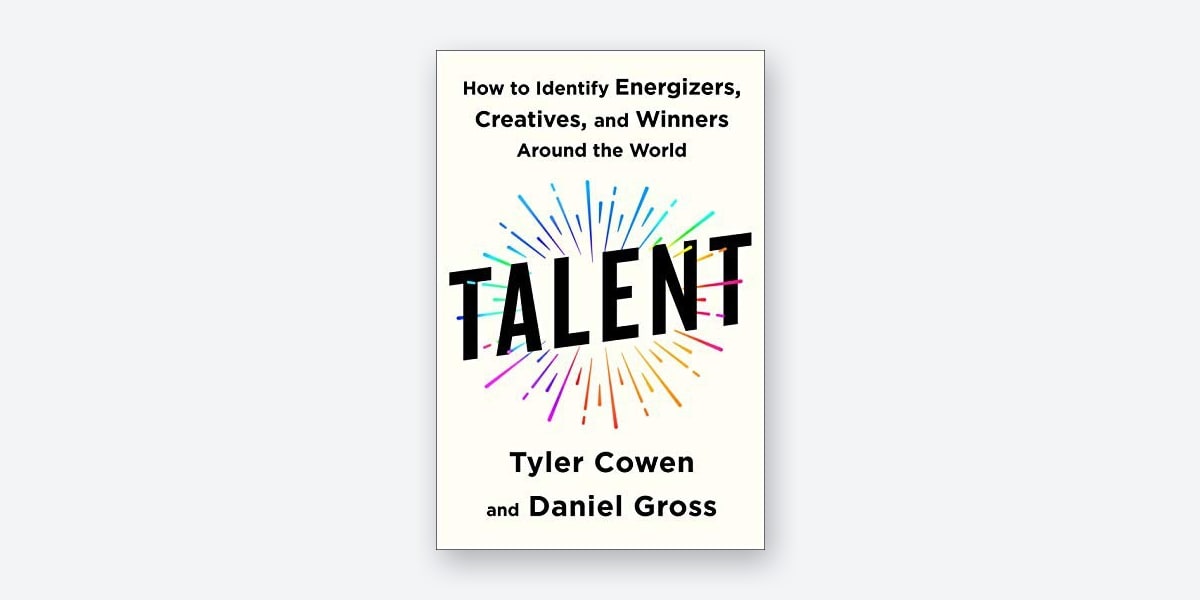
Talent is about spotting people with unusual potential, the founders, creatives and high performers that standard screening tends to filter out. Tyler Cowen and Daniel Gross published it with St. Martin's Press in May 2022, and it works as the counterweight to Who: where Smart and Street systematise hiring, Cowen and Gross look at what that system misses.
Key takeaways for HR teams:
Get the candidate out of interview mode. Prepared answers tell you little. Questions that break the script, such as asking which browser tabs someone has open right now, show how a person actually thinks.
Intelligence is overrated as a predictor among people who are already capable. The authors put more weight on energy, stamina and sustained drive, the traits that compound over a career.
On video, physical charisma counts for less, so the substance of a candidate's answers has to hold up on its own. The authors treat online interviews as a different kind of evidence, worth learning to read.
Look where others are not looking. Several chapters argue that talent is underrated in groups that conventional networks overlook, and that employers who search there find people others miss.
Applying it in Indonesia
In our searches, almost every first interview between an overseas employer and a candidate in Indonesia happens on video, so the chapter on online interviewing is directly practical. In our view, Indonesia's professional class is also one of the best-value talent pools in Asia relative to its experience. More than 80% of the people MixWork places come from multinational or global-agency backgrounds, with an average of six years of professional experience, at a fraction of what an equivalent hire costs in Singapore or Sydney. Cowen and Gross's logic applies directly here. Our guide to the Jakarta talent market covers it in more depth.
5. The Algorithm: use AI in hiring, but make it prove itself
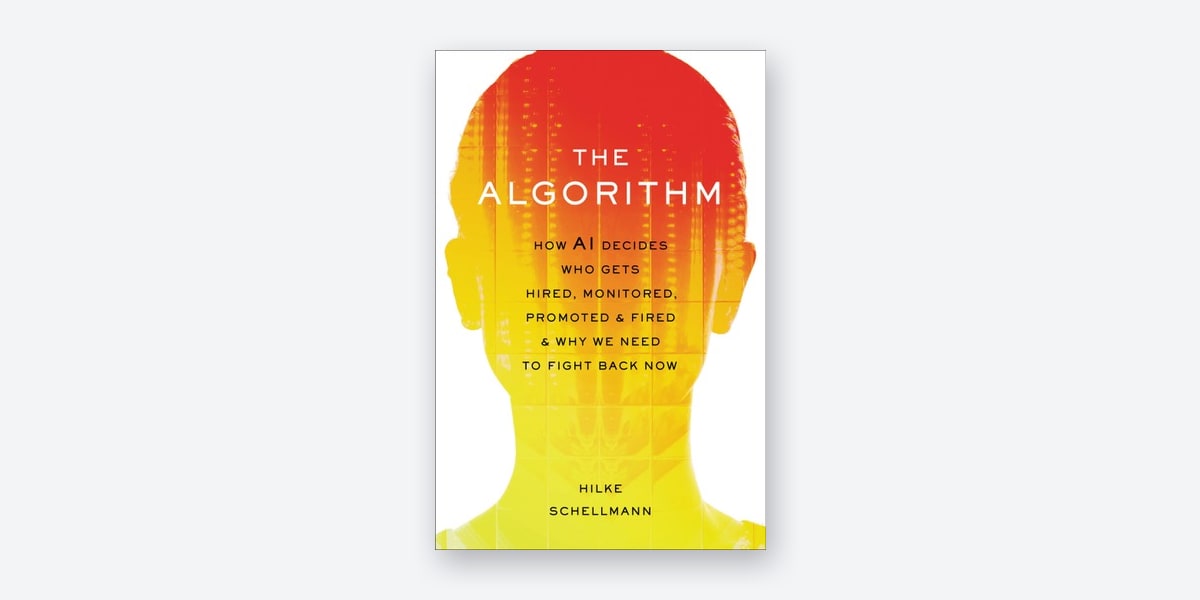
The Algorithm is the most rigorous book on AI in recruitment, because its author tested the tools herself. Hilke Schellmann, an Emmy-winning investigative journalist who teaches journalism at New York University, spent years putting AI CV screeners, AI interview tools and game-based assessments through their paces. Hachette published the results in January 2024.
Two findings stand out. She answered an AI phone interview in German, reading aloud the German Wikipedia entry on psychometrics, and the tool still rated her English six out of nine. A one-way video tool gave the same German answers a 73% match for the job. Separately, employment lawyer Mark Girouard described how a client's audit of a CV-screening tool found it had learned that being called Jared and having played high school lacrosse predicted success, most likely because those traits were common among the past hires it was trained on. The client did not buy the tool.
Key takeaways for HR teams:
Ask every vendor for validation evidence: what the tool was tested on, how large the sample was, and whether its scores predict performance in the job.
Try to break the tool yourself before any candidate meets it.
Keep a named person accountable for every rejection. AI can rank, summarise and speed up the search. It should never be the only reason someone was turned down.
Applying it in Indonesia
AI matters for candidates and recruiters alike. On the candidate side, Microsoft's Work Trend Index 2026 found that 33% of Indonesian workers are "Frontier Professionals", its term for advanced AI users, against 16% globally. Every MixWork placement works with AI tools daily as standard, and our professional learning sessions keep that capability current as the tools change. On the recruiter side, MixWork Recruit's search runs on our own proprietary data and AI tools, built inside our own platform for the region. Schellmann's book is the best argument for how that should work: the software makes the search faster, and experienced recruiters make the judgement.
What the best recruiting books agree on
The five books agree on five principles: define success before you search, go after candidates who are not applying, structure interviews but leave room for conversation, treat credentials as proxies, and make AI tools prove themselves. Across 16 years and eight authors, each principle is something an HR team can act on this week.
Principle | Where it comes from | What to change this week |
|---|---|---|
Define success before you search | Who; The Skills-Powered Organization | Rewrite your next brief as five measurable outcomes and the skills behind them |
The best candidates are not applying | Full Stack Recruiter; Who | Spend an hour a day sourcing passive candidates, not screening inbound ones |
Structure interviews, with room for conversation | Who; Talent | Ask every candidate the same core questions, then add one that breaks the script |
Credentials are proxies | The Skills-Powered Organization; Talent | Add a short work sample or a case discussion to your process |
Audit every AI tool before relying on it | The Algorithm | Ask your screening vendor for its validation report |
Hiring top professionals in Indonesia with MixWork Recruit
MixWork Recruit is MixWork's talent sourcing and recruitment service for companies building professional teams in Indonesia. What these books teach (clear outcomes, active sourcing, structured assessment, and AI that supports recruiters rather than replacing them) is what a good search in Indonesia depends on. MixWork Recruit offers:
Specialised teams. Specialised recruitment teams for IT, healthcare and medical, marketing, finance, industrial roles and C-suite search.
MNC-grade candidates. More than 80% of the people we place come from multinational or global-agency backgrounds, many of them graduates of Indonesia's leading universities, such as Universitas Indonesia, Universitas Gadjah Mada and Institut Teknologi Bandung.
Business-ready English. English is near-native among the professionals we place. They write to clients, present to stakeholders and run meetings without an intermediary.
Speed. A first shortlist arrives as fast as 24 hours for junior and mid-level roles and 48 hours for senior and director roles. A hire can start in as little as two weeks when the candidate is available. The 30-day resignation notice is what usually extends that to four to six weeks.
Retention. Twelve-month retention across our placements runs above 90%, measured on our own placement data. When the hire is employed through MixWork EOR, MixWork Total Care 360 is included to keep it that way.
To see how a search would run for your role, read our guide to choosing a recruitment agency in Indonesia or go straight to MixWork Recruit.
Sources
The MIT Press: The Skills-Powered Organization (accessed 03 Oct 2026)
Full Stack Recruiter: table of contents (accessed 03 Oct 2026)
Penguin Random House: Who, by Geoff Smart and Randy Street (accessed 03 Oct 2026)
Google Books: Talent, by Tyler Cowen and Daniel Gross (accessed 03 Oct 2026)
Hachette Book Group: The Algorithm (accessed 03 Oct 2026)
MIT Technology Review: We tested AI interview tools (07 Jul 2021)
Quartz: Companies are on the hook if their hiring algorithms are biased (accessed 03 Oct 2026)
Microsoft Source Asia: Work Trend Index 2026, Indonesia findings (30 Jun 2026)
Employment terms mentioned in this article, including the resignation notice period, are summarised for general information as at October 2026 and are not legal advice. A new Indonesian manpower law is due by 31 October 2026 and may change these terms. Confirm the current position with local legal counsel before acting on it.